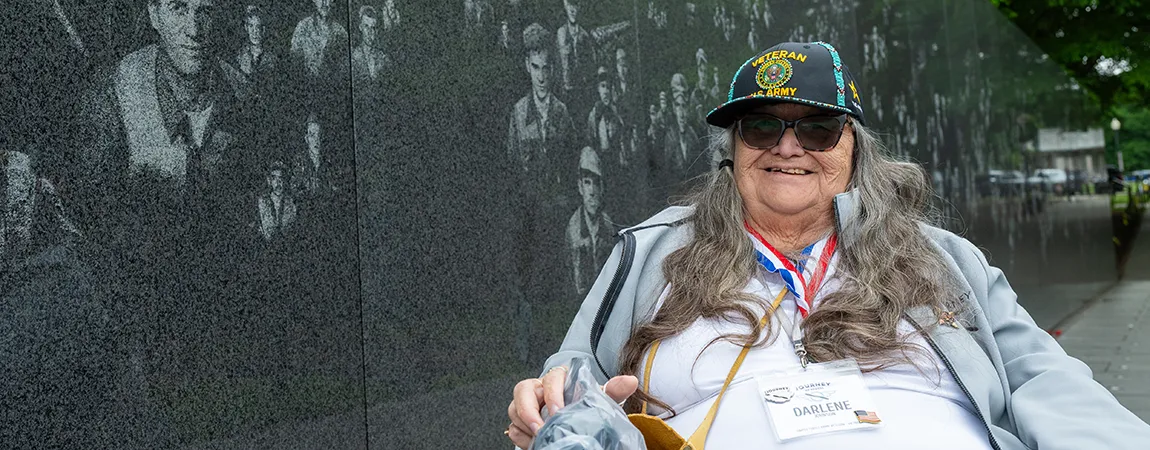
Born between two worlds—an Army base and the Rosebud Sioux Reservation in South Dakota —Darlene grew up surrounded by strong women. Inspired by her mother, a World War II veteran who dismantled bombs, and her aunt, another proud military hero, Darlene knew at an early age that she wanted to serve her country, too.
While volunteering at a local hospital in high school, Darlene was deeply affected by a man who came in with horrific blisters all over his skin. It was the result of being burned by mustard gas, a now-illegal chemical used by some military regimes in other countries. As she comforted the severely burned patient, she felt a deeper calling to heal others. She enlisted in the Army to become a nurse.
Pursuing her calling at all costs
Darlene developed her skills in the Army Nurse Corps and earned her nursing degree. During the Vietnam War, she spent a year in Korea, often flying with patients in helicopters. Yet, because she was a woman, she was denied the military’s Hazardous Duty Incentive Pay, which was routinely given to male service members with higher-risk responsibilities (including flying).
Throughout her military career, she cared for countless wounded soldiers at veterans’ hospitals with compassion and skill. But as one of the few Native American women in uniform, she faced racism, sexism, and constant dismissal. She endured sexual assault on base that left her with lifelong PTSD and no support from authorities.
Though scarred by injustice, Darlene continued using her skills and knowledge to help others. After retiring from the Army Nurse Corps with the rank of Captain, she reconnected to her roots by serving another 15 years as a nurse on Native American reservations.
As a mother of four children and stepmother to three, Darlene also recognized the challenges Native American youth faced in education. She volunteered for dropout prevention programs for Native Americans, working to support and encourage students to stay in school. With a personal interest in maternal health, Darlene also became a speaker for the March of Dimes, where she advocated for the healthier futures of mothers and babies.
Unwelcomed changes
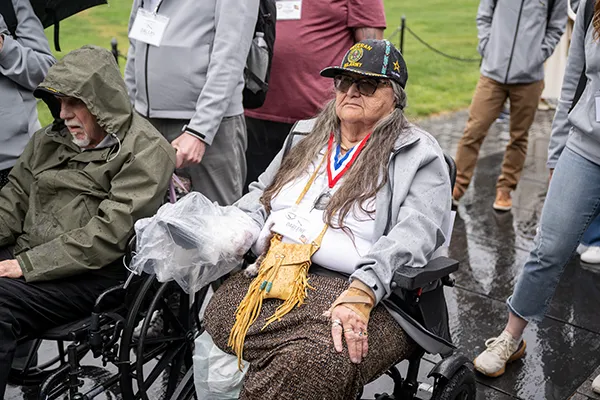
In 2018, severe leg pain and blood clots led Darlene to undergo a series of 11 surgeries. However, none of the surgeries were successful, resulting in an above-the-knee amputation. Wheelchair-bound, she moved into a veteran’s retirement community in Oregon, far from her beloved Sioux tribe in South Dakota. Her loneliness deepened in 2023 when her twin sister, also a veteran, passed away.
Another chance for healing
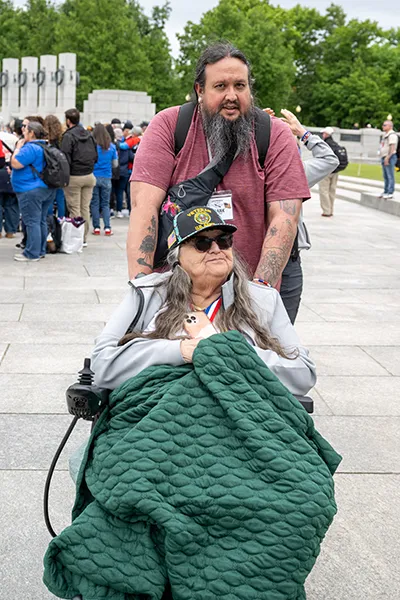
Still carrying grief, Darlene began beading hats, sewing pillows and making blankets, which she donated to residents and fellow veterans in her community. As she reflects back on her service and career, she desires healing and closure more than recognition in the form of medals.
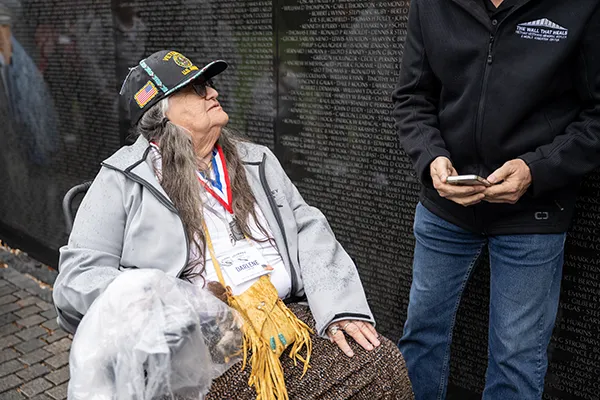
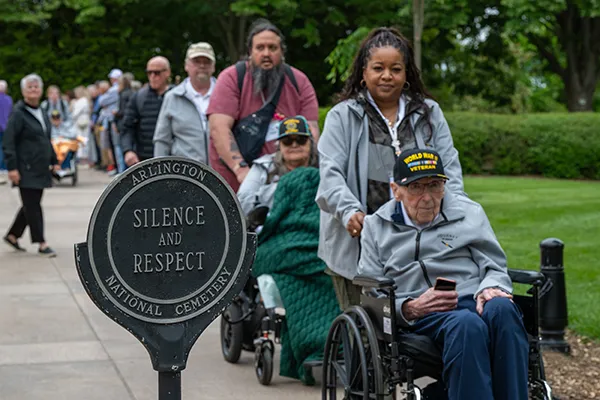
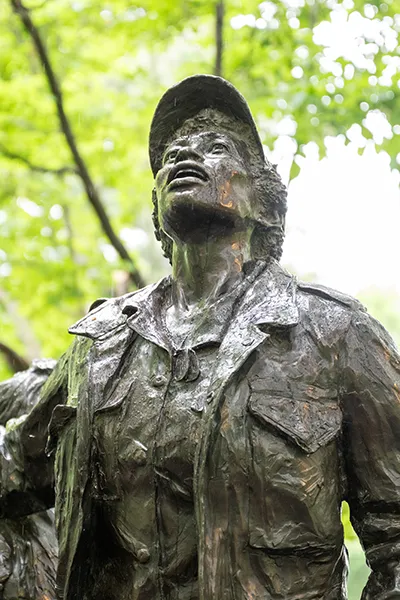
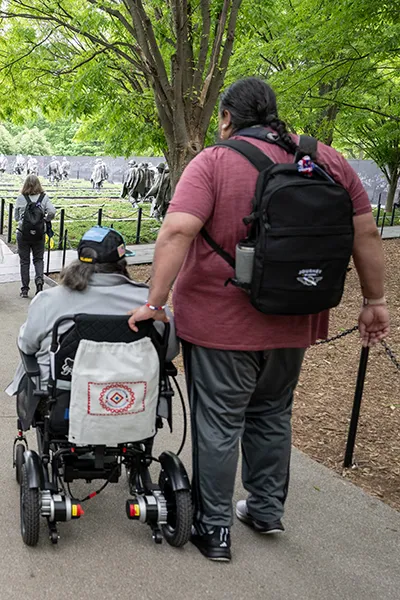
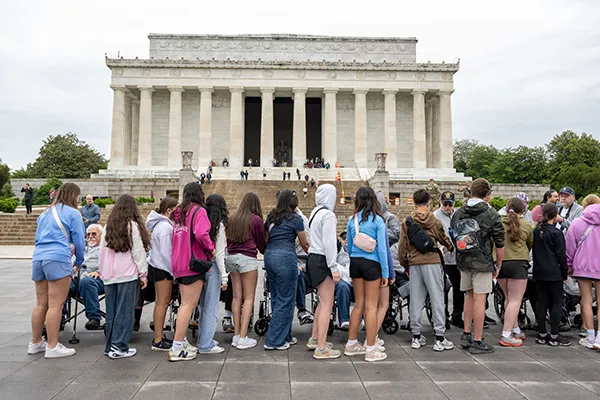
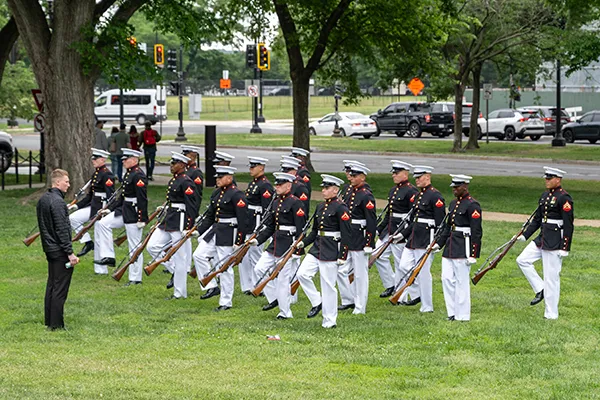
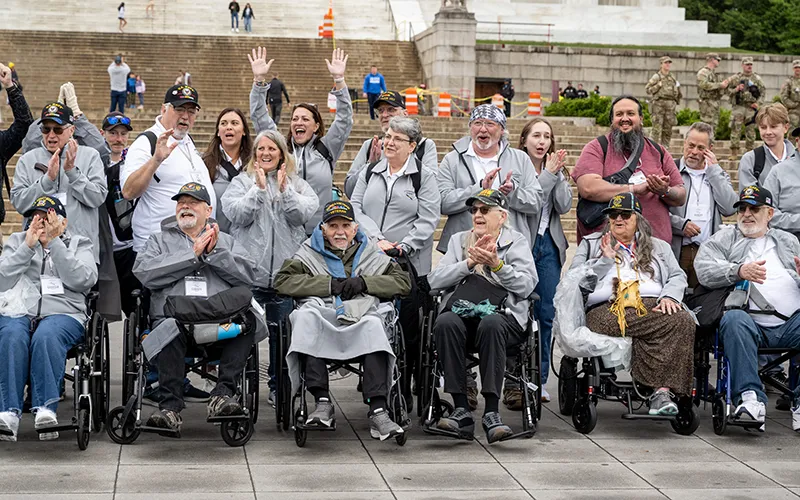
For this reason, Wish of a Lifetime and Vital Life Foundation were thrilled to invite Darlene to join Journey of Heroes 2026, a program dedicated to honoring older veterans in the Pacific northwest. Accompanied by her son Frank, Darlene traveled to Washington, D.C., with a cohort of veterans. The group visited monuments honoring those who served, experienced military ceremonies, were honored by local school children, and connected with each other.
For Darlene, the trip was a chance to honor her sister and finally feel seen. Her favorite part was seeing the Military Women’s Memorial. “There was an empty part [in me] that’s not there anymore,” Darlene shared. “I felt accepted, whole, and completed.”
Don’t miss a wish story!