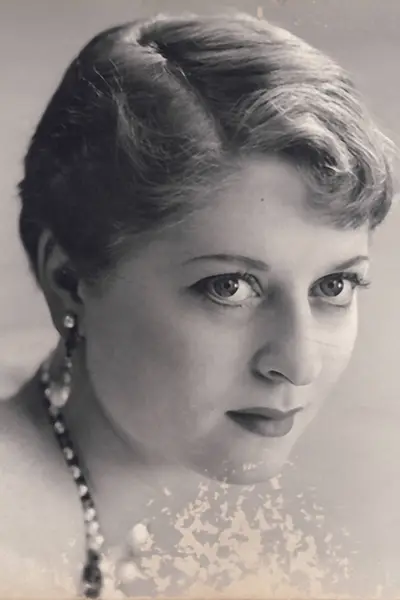
In January 1953, 21-year-old Joyce left her home in Johannesburg, South Africa, and boarded a ship bound for Southampton, England. Fueled by her dream of becoming an actress, she continued across the Atlantic aboard the Queen Mary, arriving in New York City for the first time. Aside from a family friend in New York and a distant cousin in Los Angeles whom she’d never met, Joyce didn’t know a soul in the United States.
After just a few weeks in New York, Joyce boarded a train that would take her to Los Angeles, where she would begin her acting career in a Yiddish-speaking play, starring opposite a then-unknown actor named Leonard Nemoy.
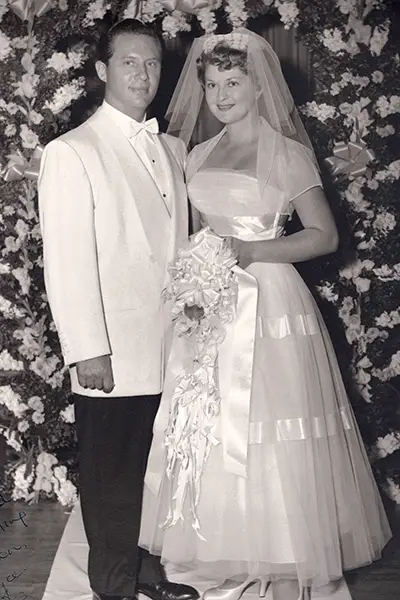
One night, another young immigrant visited the theater where Joyce performed, a Hungarian man and Holocaust survivor who had come to L.A. by way of Canada. The two were set up on a blind date, later married, and spent 57 years together.
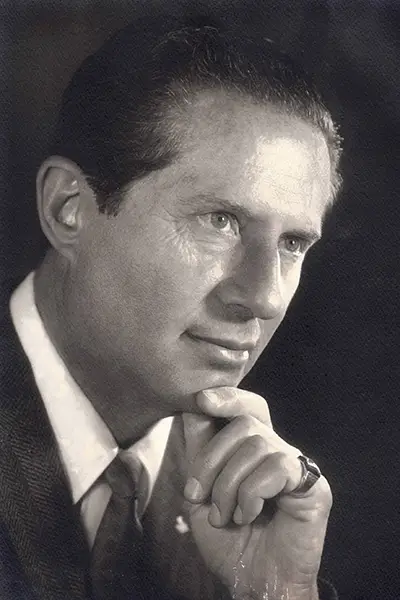
Passing on a brave history
Lisa, daughter of Joyce, grew up hearing her mother’s brave immigration story and adventurous cross-country journey that led to meeting her father.
“That train trip shaped my mother’s view of America. She had such a deep appreciation for traveling and the world,” Lisa said. “My parents raised me with respect for our world and how our differences are points of connection, as well as [with] great pride in being American citizens.”
Lisa’s mother left acting to raise a family, but her sense of adventure and resilience remained. “At age 82 she came to live in Colorado to be near me and my family, including her three grandchildren. She had never lived in or near snow in her entire life, but she embraced that challenge with a good pair of boots, a parka, and an amazing attitude,” Lisa recalled.
After suffering multiple health challenges in her later years, Joyce needed constant assistance. Now, it was Lisa’s turn to demonstrate the resilience and bravery her mother had instilled in her, not through travel, but through care. Even as Joyce entered hospice, Lisa embraced her role as Joyce’s primary caregiver. Lisa kept daily journals of their talks, capturing the essence of her mother’s life and the spirit that carried her across continents.
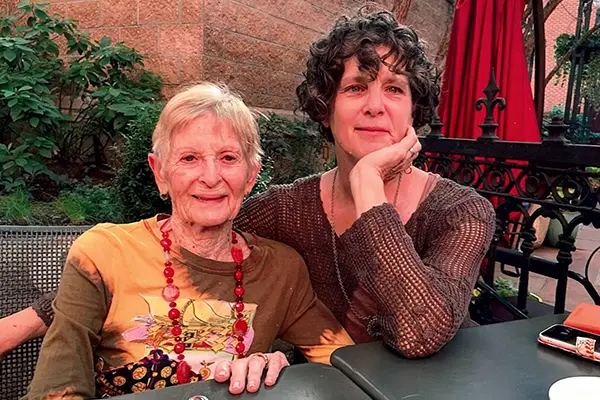
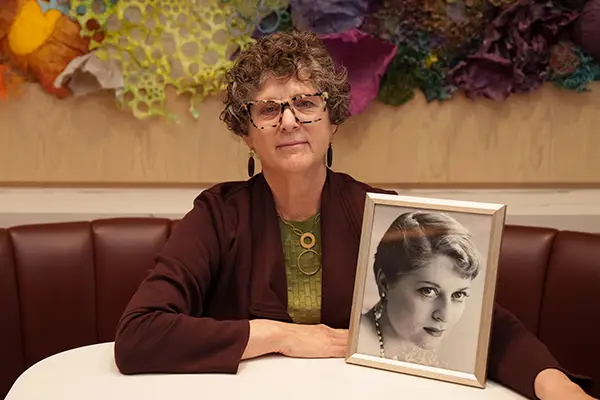
By the time Joyce passed away in 2024 at the age of 93, Lisa had experienced countless deep conversations, laughter, tears, and the kind of closeness that only comes from walking someone through their most vulnerable moments.
“Near the end of her life, Mom shared what it was like to travel alone as a young woman, a rarity in the 1950s,” Lisa remembered. “She said while it was scary, she was never scared because she trusted the journey she was on, a statement that has served as a guiding light for me.”
Retracing her mother’s journey
Then in May 2025, after working since she was 14, raising a family, and building a career, Lisa experienced the sudden and unexpected loss of her job. “My department was eliminated, thrusting me back into the job market at 66 years old,” Lisa explained. “As a senior-level marketing professional, my eyes were wide open as to how hard the job market is, not to mention for someone at my age.”
Unsure what to do next and still grieving her mother’s death, Lisa had an idea. She wanted to connect with the younger version of her mother by recreating her exact journey by train across the country. Lisa hoped to see America through her mother’s eyes, as Lisa herself reframed the next chapter of her own life.
During the trip, she also hoped to finish the first draft of a memoir-based performance work about her experience as a caregiver, daughter, and writer. She believed the journey would help her process her grief, reconnect with her creativity, and inspire others to live boldly—especially older adults who are often told to fade quietly into the background.
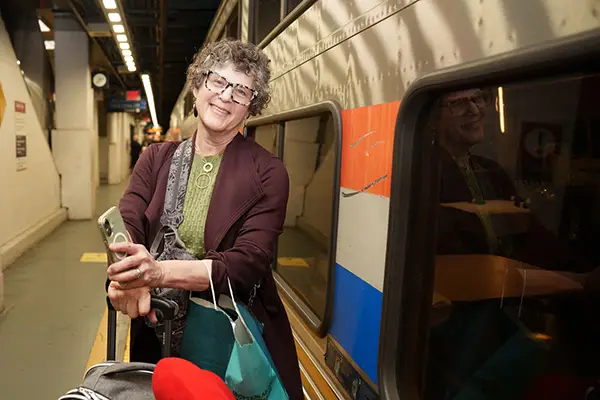
“My mom believed in me as a writer,” Lisa says. “She always wished I had more time and resources to bring my stories to life. This adventure would frame how I continue to age. It’s important for me to defy society’s limitations on older people.”
Reflections from the trip
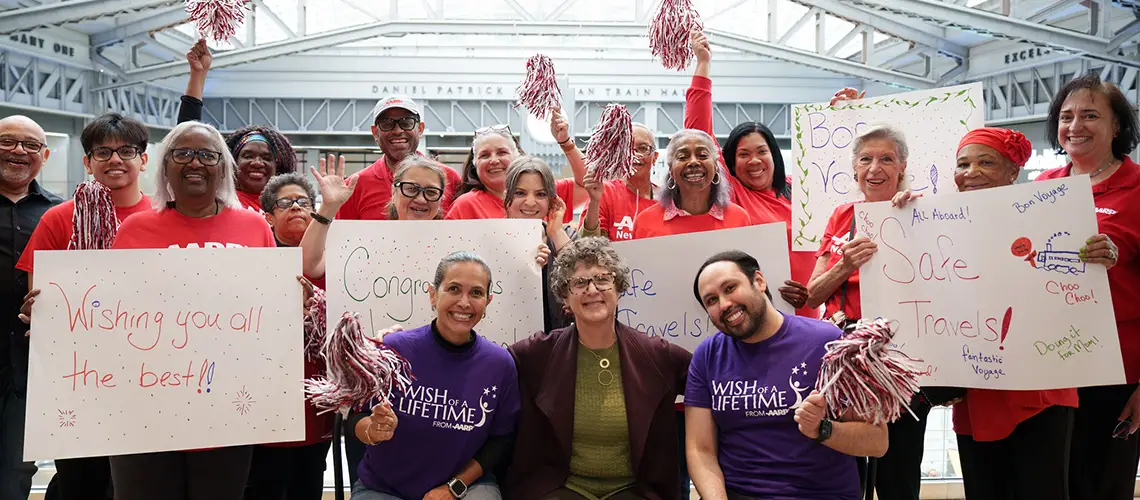
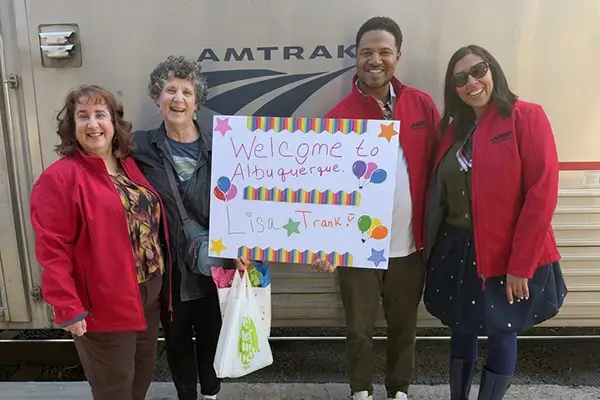
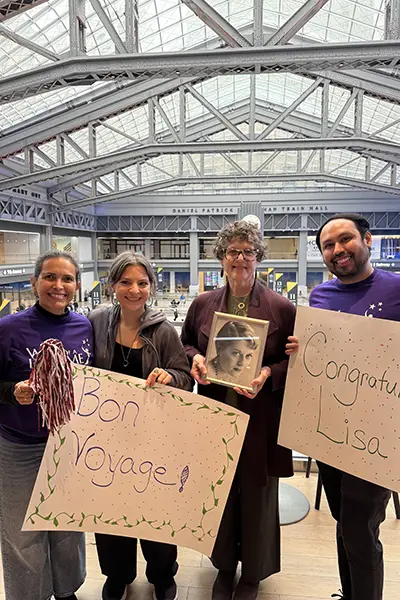
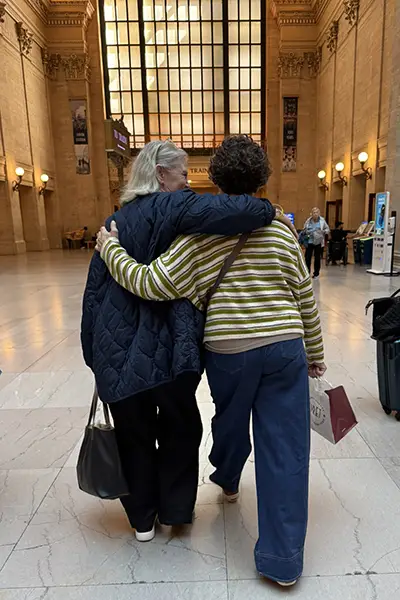
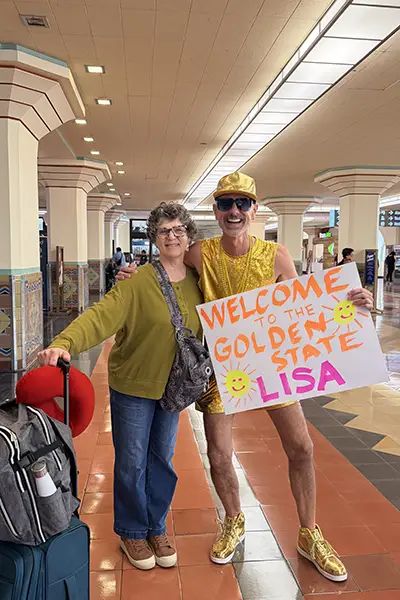
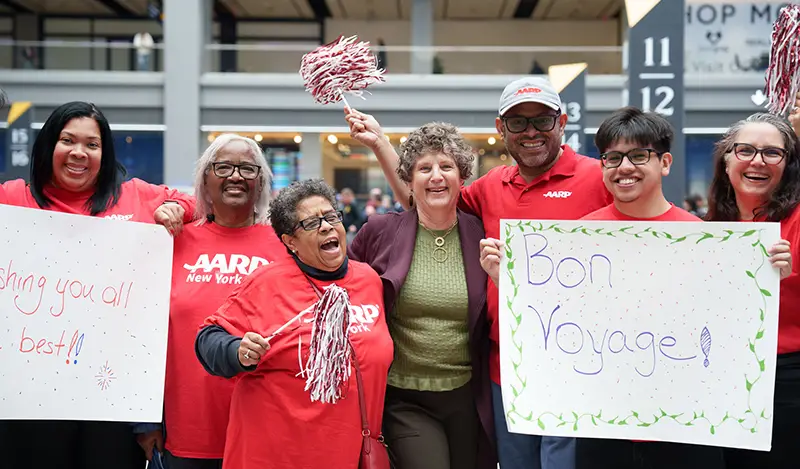
Wish of a Lifetime was honored to arrange cross-country train travel for Lisa, generously donated by Amtrak®, along the same route her mother had taken more than 70 years earlier. Her journey began with accommodations in New York from our Official Hotel Provider, Wyndam Hotels & Resorts, along with a send-off ceremony and greetings from AARP volunteers from our New York, Chicago and New Mexico state offices at stations along the way. After traveling across the country, Lisa reached her final destination in California, where a volunteer dressed head to toe in gold gave her a memorable welcome to the Golden State. At last, Lisa had completed the coast-to-coast journey she had only heard about through her mother’s stories.
At the end of the trip, as she visited her parents’ gravesites in L.A., Lisa was expecting to feel sad. Instead, she felt something different. In her own words, Lisa described her final thoughts on her blog:
I realize that it’s impossible to trace someone else’s tracks. I can take the same path, gaze at the same geography, but it’s not what my mom experienced. How could it be? She was her own person and I am my own.
At the end of this trip, I realize that in searching for my mother’s America, I found something I wasn’t expecting.
I discovered my own America. My own internal and external landscape.It’s a warm Southern California day. The sun beats down and I can hear insects buzzing. A lawn mower trims the grass.
I stand up and brush myself off. I head back to the car and drive away from my parents and other ancestors.It’s time to hug my husband.
Thank you, Wish of a Lifetime from AARP for making this wish a reality and a life changing one at that.
This trip is the beginning of another journey, one unknown and profound. One I’m eternally grateful for.
How can you stay connected to a loved one who has passed away like Lisa did? AARP articles offer suggestions.
Finish a project that your loved one started. Did your loved one have a hiking goal, want to perfect a certain recipe, or find meaning in charity fundraising? Follow in their footsteps.
Preserve memories. Gather tangible items that remind you of your deceased loved one including photos, letters, recipes, or other mementos. Organize them in a memory box that you can easily revisit.
Join an AARP Community discussion. AARP offers forums, including ones on grief and loss, where people can ask questions and get answers from other community members of what gave them comfort.
Don’t miss a wish story!