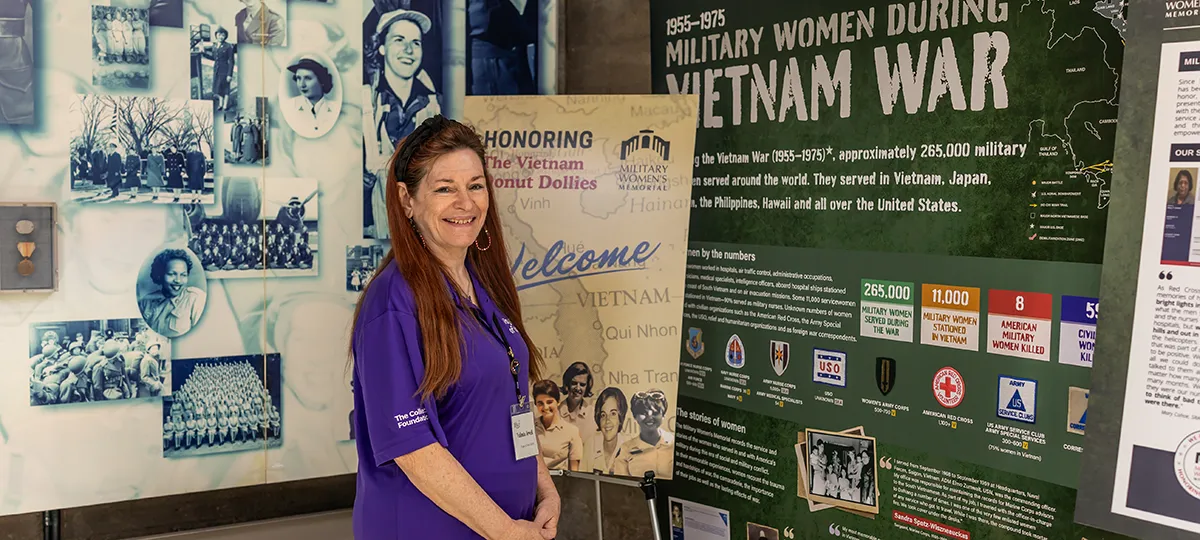
They called Vietnam “America’s Longest War” at the time, continuing for more than 20 years. By the time Valinda, 70, was old enough to enlist in the Army in 1973, the last U.S. military unit was withdrawing. The remaining American prisoners of war were being released from Hanoi. But trauma from the effects of war was far from over.
Valinda served as a military journalist stationed in Germany during a time that became known as the “postwar war.” Both North and South Vietnam alleged the other had violated peace agreements, and bloodshed among the Vietnamese continued. Many service members turned to drugs to cope with their invisible pain.
The effects of war
The base where Valinda served had once been a combat post and later acted as a transition point for soldiers moving to and from Vietnam. During her three years of deployment, Valinda endured multiple instances of Military Sexual Trauma (MST), which she carried without support for decades. The experiences diminished the strong sense of patriotism she once felt.
“I was fortunate to survive this experience psychologically because I was the only female in this battalion for six months and only one of a handful of women for the remaining two years,” Valinda remembered.
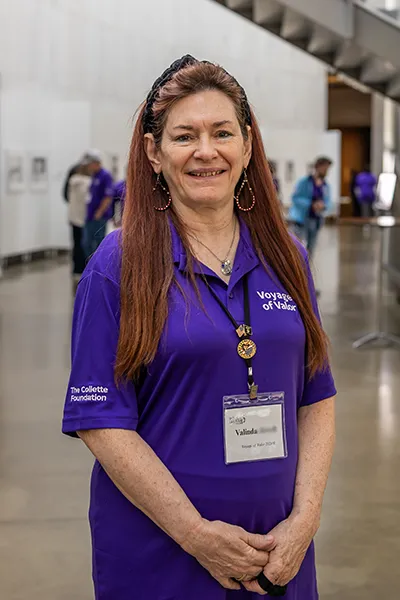
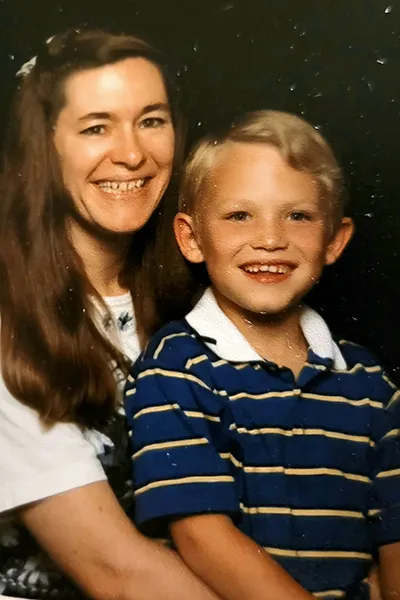
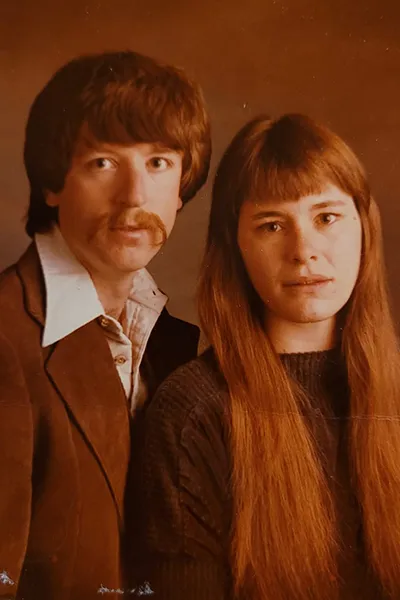
Rebuilding after trauma
After returning home to Wyoming, Valinda tried to put her trauma behind her. She devoted herself to new forms of public service while also raising a family. For 20 years, she taught in rural schools, often serving as the only instructor for children from kindergarten through fourth grade. In that role, she taught every subject—math, science, gym, and more—and even took on responsibilities as the lunch lady.
Then at 38, Valinda decided she wanted to return to journalism. As a path back to reporting, she joined the U.S. Army Reserve. First, she worked as a cook for a National Guard unit in Wyoming, preparing three fresh meals for 100 members both in the field and at the unit base. Eventually, she achieved her goal and began working for a joint Air Force/Army publication.
Later, while thinking about how she could give back to others, Valinda pursued consulting opportunities and completed certifications that focused on moral injury recovery and emotional regulation. Her goal was to guide victims of brutal loss and abuse—both military and civilian—to effective healing methods and resources for personal growth.
Finally, nearly 50 years after experiencing Military Sexual Trauma (MST), a VA counselor helped Valinda understand that she was a victim, too, and was deserving of the support that she so easily gave to others. She began participating in a multigenerational support group of women who also suffered from MST and found the community and connection she needed to start the journey towards healing.
New hardship, long-awaited recognition and healing
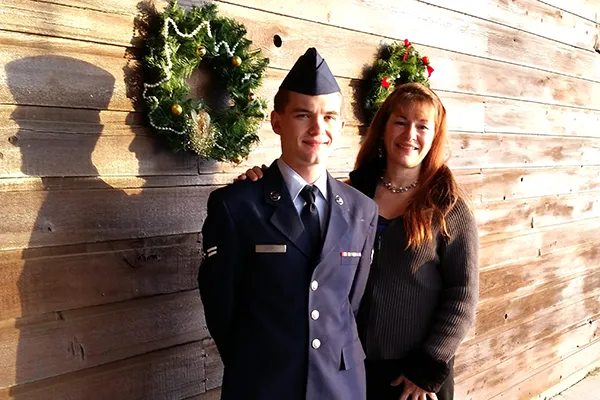
A proud mother of an Air Force veteran and two first responders, Valinda’s family is dedicated to serving others. In 2024, that commitment came with unimaginable loss when her son-in-law, a police officer, was killed in the line of duty. “Our tranquil little community is still recovering,” Valinda told us.
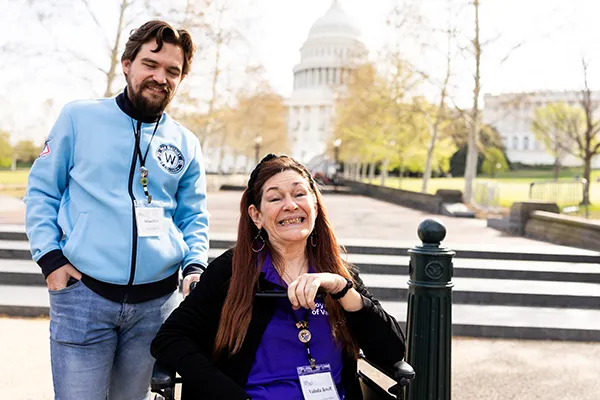
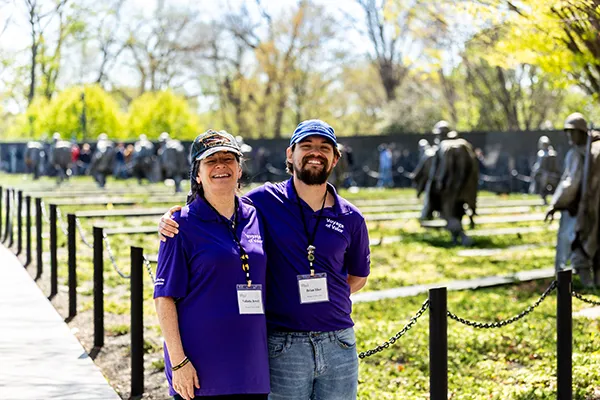
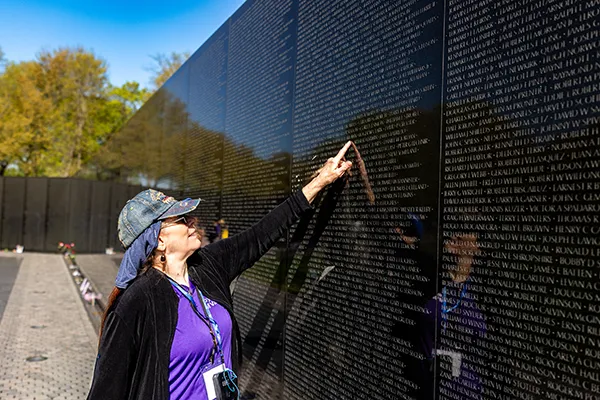
One year later, her son-in-law, also a two-tour veteran in Afghanistan, was recognized in a memorial ceremony in Washington, D.C. Valinda was not able to attend, but continued to dream about seeing the place where he was honored. Wish of Lifetime made this possible by inviting Valinda to join the 2026 Voyage of Valor program with 14 other Wyoming Vietnam-era veterans. As part of the program, Valinda traveled to Washington D.C. with her son Brian as her companion, to finally receive the honor she deserved at the Military Women’s Memorial.
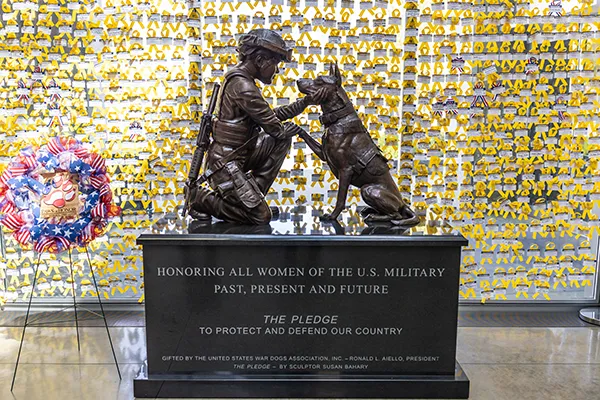
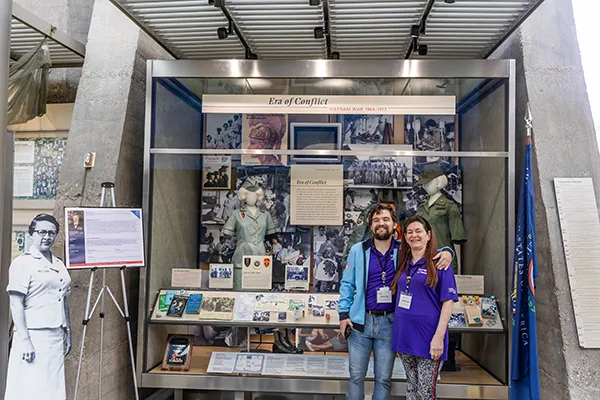
“It was like getting a star on the Hollywood Walk of Fame and an Oscar in the same week. I didn’t know what to expect; I would say that it was an essential part of my healing journey from Military Sexual Trauma,” Valinda said. “I feel like now I could legitimately wear the Vietnam-era hat. It felt like something I didn’t deserve before because I wasn’t a combat veteran.”
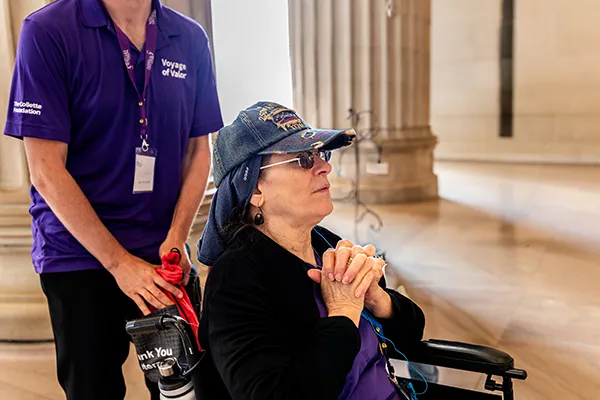
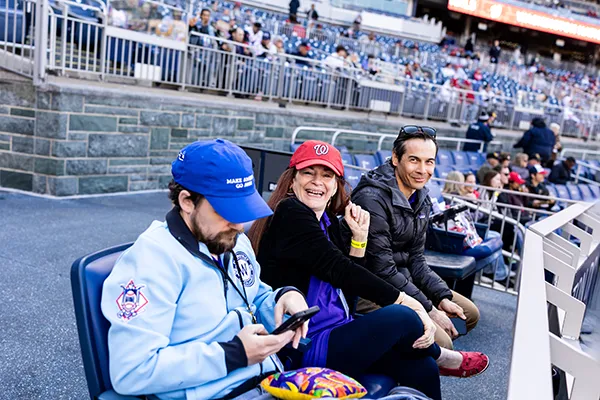
In Washington, Valinda got to see many famous landmarks and received special recognition at a Washington Nationals baseball game. But she was most moved by unexpected moments that she called “divine appointments”: seeing another veteran surrounded by students who wanted to hear his story, leaving a dog tag in memory of her son-in-law, visiting the Law Enforcement Memorial, reading the words of Abraham Lincoln, and attending a ceremony where everyone shared how they felt about the program. “It felt like family,” Valinda said.
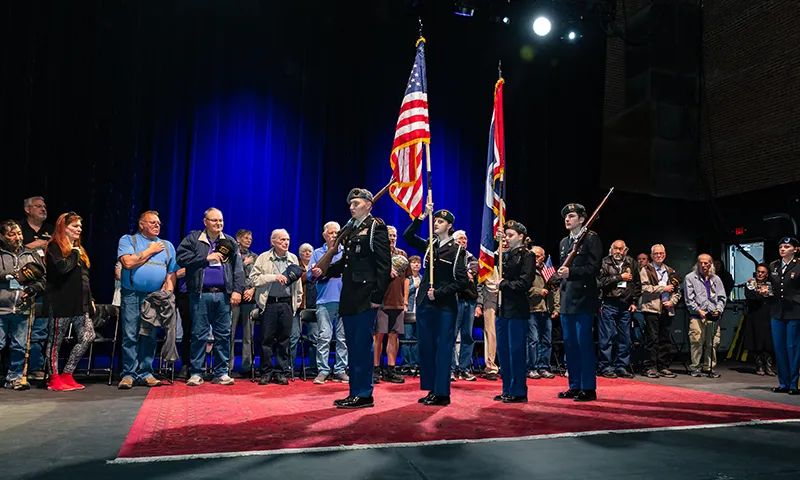
After the trip, Valinda and the others returned to a Welcome Home celebration in Wyoming. “By the end of the experience, there was a moment that I was actually able to sing the National Anthem [for the first time] in years. It was an opportunity to experience some level of forgiveness that helped me recover my patriotism.”
Don’t miss a wish story!